Rapid Access Assessment for Acute Knee Injuries
Fast answers.
Clear recommendations.
Better outcomes.
What Is the Acute Knee Injury Clinic?

The Acute Knee Injury Clinic is a rapid-access knee assessment program designed to evaluate acute knee injuries and help triage patient care efficiently.
The AKIC bridges the gap between initial injury and definitive management by providing:
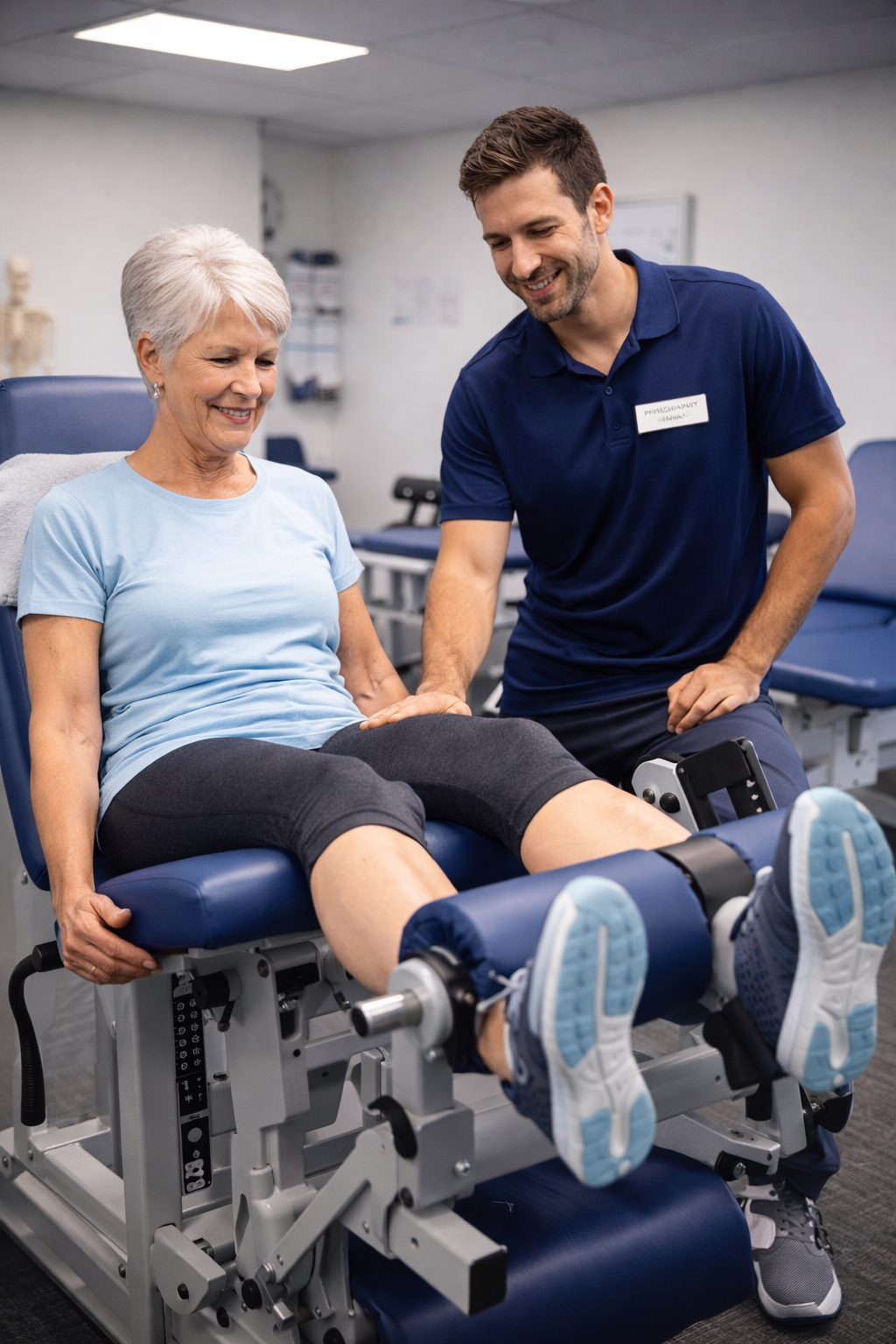
Expert physiotherapy clinical examination
Clear working diagnosis
Evidence-based treatment recommendations
Timely referral to orthopaedics or sports medicine when appropriate
How the Acute Knee Injury Clinic Works

Step 1
Contact the Clinic
Patients may self refer directly, or be referred by a physician or healthcare provider
Patients may self refer directly, or be referred by a physician or healthcare provider
Referrals from healthcare providers are welcome

Step 2
Rapid Access Booking
Once contact is made, our administrative team coordinates rapid access to assessment, with the goal of being seen within 14 days.
Appointment scheduled promptly
Relevant imaging or reports reviewed when available
Step 3
Expert clinical Assessment
Your AKIC appointment includes a comprehensive knee assessment performed by an experienced physiotherapist with expertise in acute knee injuries.
Thorough physical examination
Review of imaging (if available)
Clinical Diagnosis
Step 4
Comprehensive treatment plan
Following assessment, patients receive a comprehensive care plan tailored to their presentation.
A personalized symptom management plan
A targeted exercise program appropriate for the stage of injury
Activity modification and return-to-activity guidance
Recommendations for further imaging or specialist referral, when indicated
Contact Us